How to Introduce Religious Books to Children: Where to Begin?
In today’s digital age, connecting children with their roots and traditions has become a significant challenge. Religious education is not just about rituals; it is a foundation for ethics, patience, and the ability to distinguish between right and wrong.
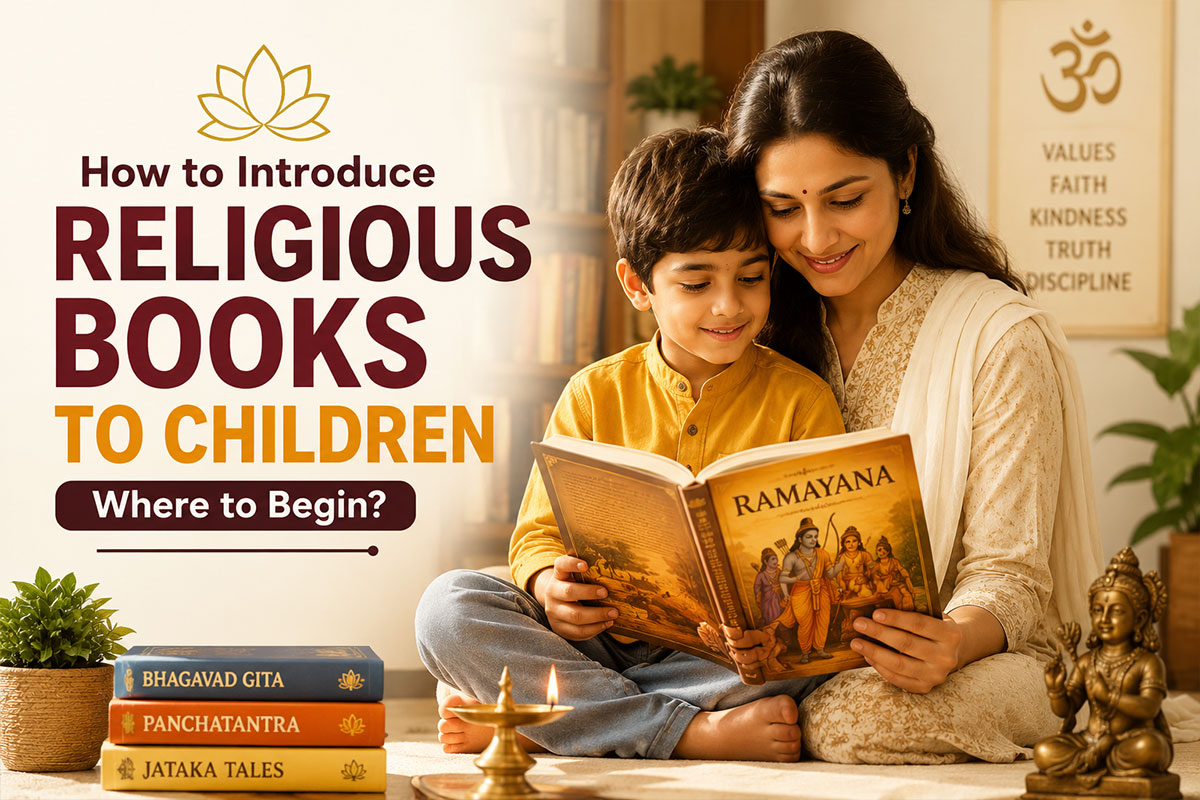
- Start with Storytelling: Children are naturally drawn to stories rather than lectures. Begin with illustrated editions of scriptures like the Ramayana or other spiritual texts. Vibrant pictures capture their imagination quickly. Instead of making them memorize verses, share the fascinating stories behind those verses.
- Lead by Example: Children emulate what they see. If they see you reading spiritual texts daily, they will naturally become curious. Invite them to sit with you during your reading time and explain the core values in simple terms. Your behavior is their greatest inspiration.
- Encourage Curiosity: Don’t treat religious books as "untouchable objects" kept on a high shelf. Keep simplified versions within their reach. Let them ask questions. If a child asks, "Where is God?", explain it with simple, logical examples rather than silencing them. Religion should be a dialogue, not a burden.
- Use Modern Formats: Incorporate modern media like graphic novels, comics, and animation. These formats bridge the gap between ancient wisdom and modern interests. Audiobooks and educational podcasts can also be great tools to introduce them to spiritual concepts in a fun way.
Conclusion: Handing a religious book to a child is about more than just faith; it is about character building. When they witness courage, compassion, and honesty through these stories, they will naturally gravitate toward these life-long values.



 Chat with us